
OPEN UNIVERSE PROJECT

TECHNOLOGY

Gateway to Space Within Reach

Near Space Flight involves boarding a large gas balloon approximately 60 meters in height, and enjoying the magnificent view of space from the region known as Near Space *. It is a day-trip space experience lasting about 4–6 hours.

For safety reasons, flights are operated only on days with favorable weather, and within Japan, the suitable period for flights is from June to September.

* A commonly used term referring to the upper atmosphere located between approximately 18 km and 100 km altitude, just below outer space.
Flight Altitude and Duration

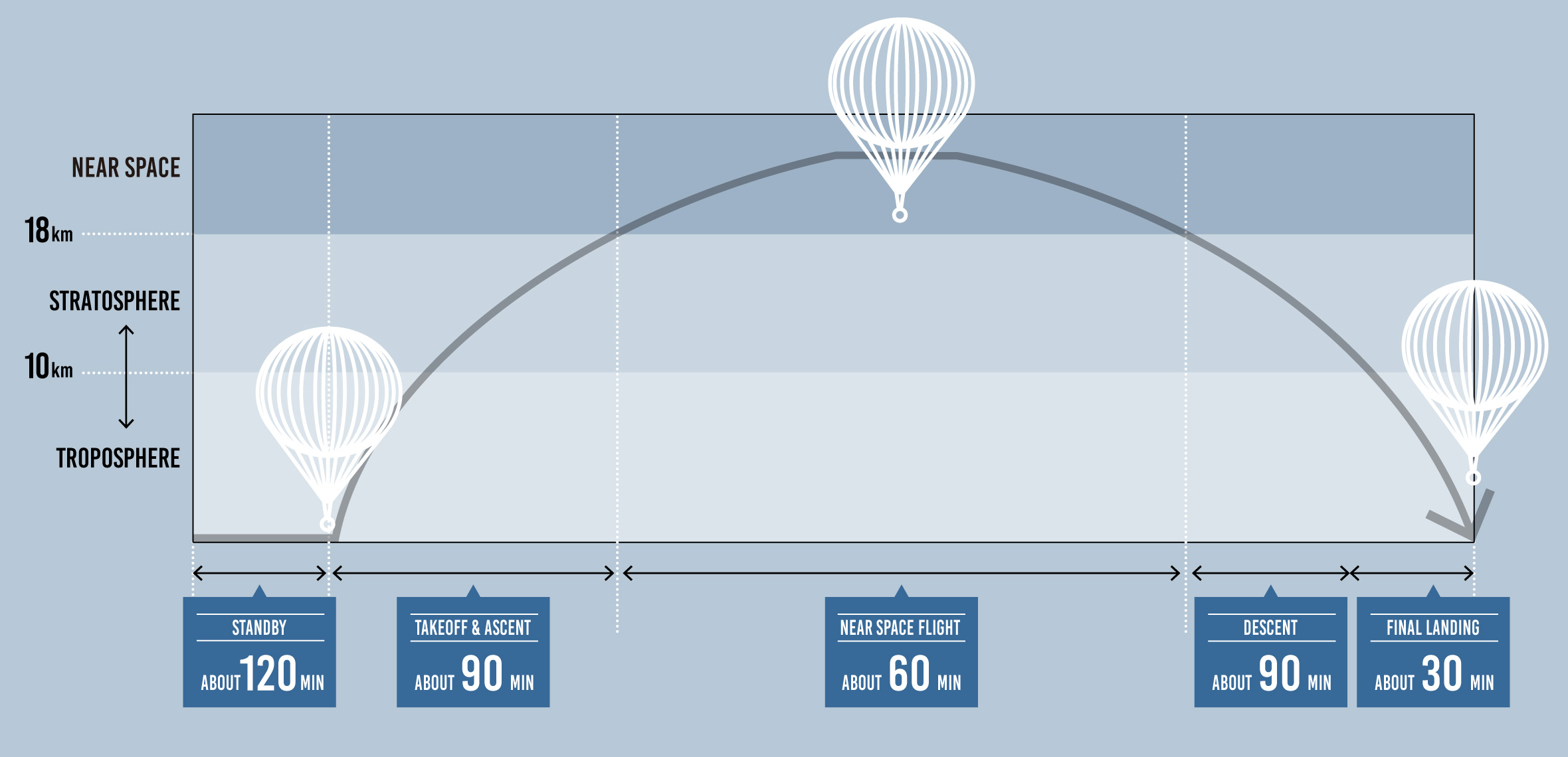
Diagram: Altitude and Duration

Near Space Flight Data

25km Maximum Altitude

The flight reaches 18–25 km, far beyond the cruising altitude of commercial aircraft. (The altitude varies depending on season and weather.)

24M yen Cost per Flight

Compared to rockets, this is a more accessible price. We aim to lower costs further by scaling up.

1,000kg Payload Capacity

Heavy payloads can be lifted to altitudes far above aircraft. Beyond carrying people, many applications are expected.

4–6hours Flight Duration

A relaxed round trip from the ground to Near Space offers a one-day space experience.

0.8atm Cabin Pressure

The cabin pressure is about 0.8 atm, the same as that of the commercial aircraft.

500+ Test Flights

With over 50 manned and 500 unmanned flights, we hold Japan’s leading record of flight achievements.

0.0000082% Serious Accident Rate

Balloons ascend and descend slowly with buoyancy, offering safety comparable to cars and airplanes.

60 Patents Acquired

We have accumulated advanced expertise across development, manufacturing, and operations.

Flight Performance

Safe, reliable, and affordableSpace Experience “for everyone”

Changing the common sense of space.
The gas balloon approach removes the barriers of physical and financial constraints that have limited space travel, opening a new world where anyone can experience the unknown realm of space.

Pressurized CabinT-10 Earther

At the maximum altitude of 25 km, the outside conditions are near-vacuum, extremely low temperatures, and very low oxygen levels. For humans, this is almost the same as outer space, requiring spacecraft-level functions in the cabin. The two-seat cabin “T-10 Earther” by Iwaya Giken Iwaya Inc. boasts high safety in pressure resistance, insulation, and airtightness, while also pursuing design and comfort to enhance the value of the space sightseeing experienc e Near Space Flight.

  • The 1.7 m diameter cabin is designed in a spherical form with high pressure resistance.

  • Leather bucket seats provide comfort even on long flights.

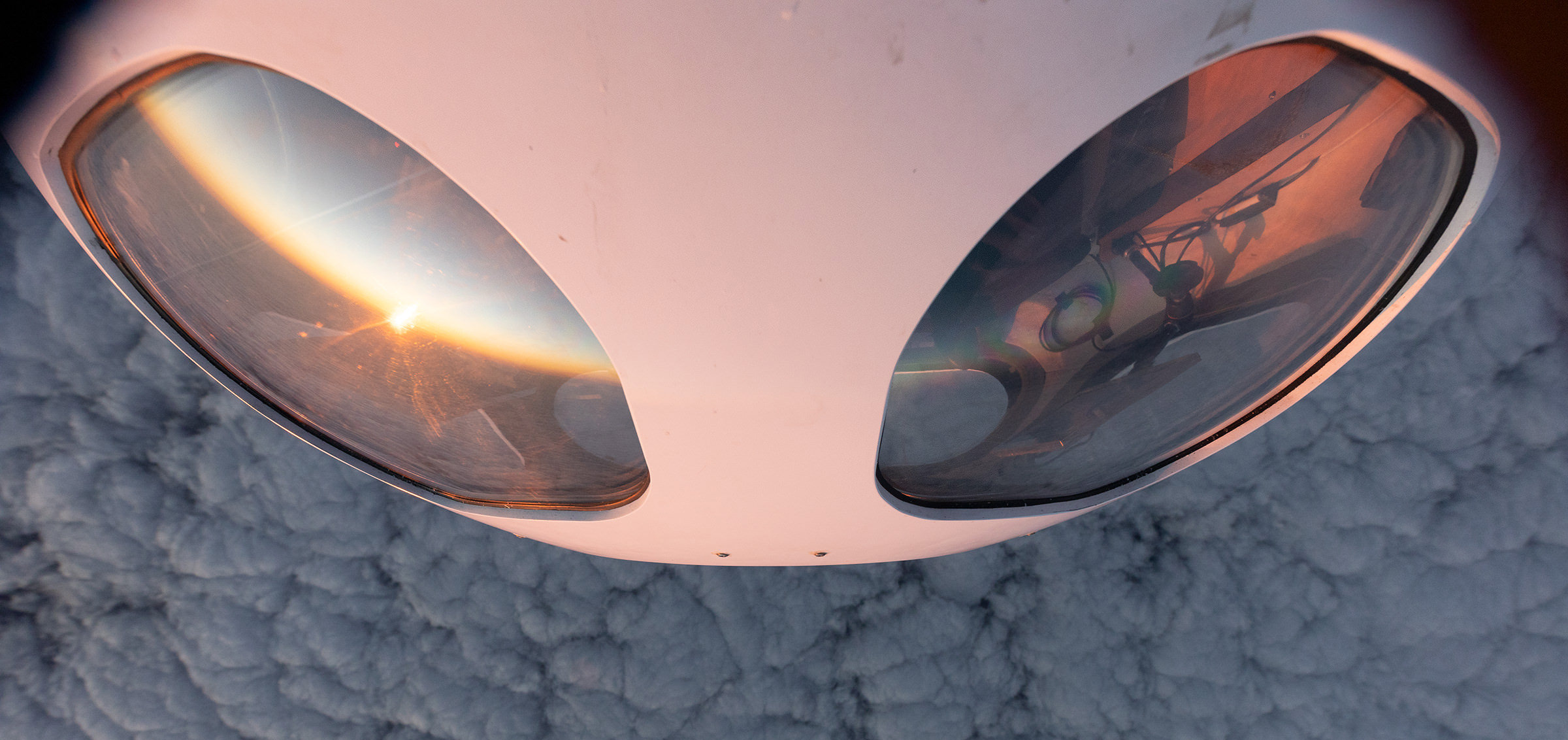
  • The scenery during flight can be enjoyed panoramically through a 1.5 m dome-shaped acrylic window.

Ultra-High AltitudeNear Space Balloon

Iwaya Inc.’s balloon, about 60 m tall, has the structure and strength to stably lift heavy payloads to the stratospheric region known as Near Space. In addition to a barrier function preventing gas leakage, it is equipped with a system that inhibits rupture, and its design ensures safe flight by preventing sudden falls even in the event of gas leakage.

  • Non-flammable helium gas provides buoyancy to slowly carry payloads over 1 ton upward.

  • Polyethylene material resistant to low temperatures is joined with unique technology that minimizes gas leakage.

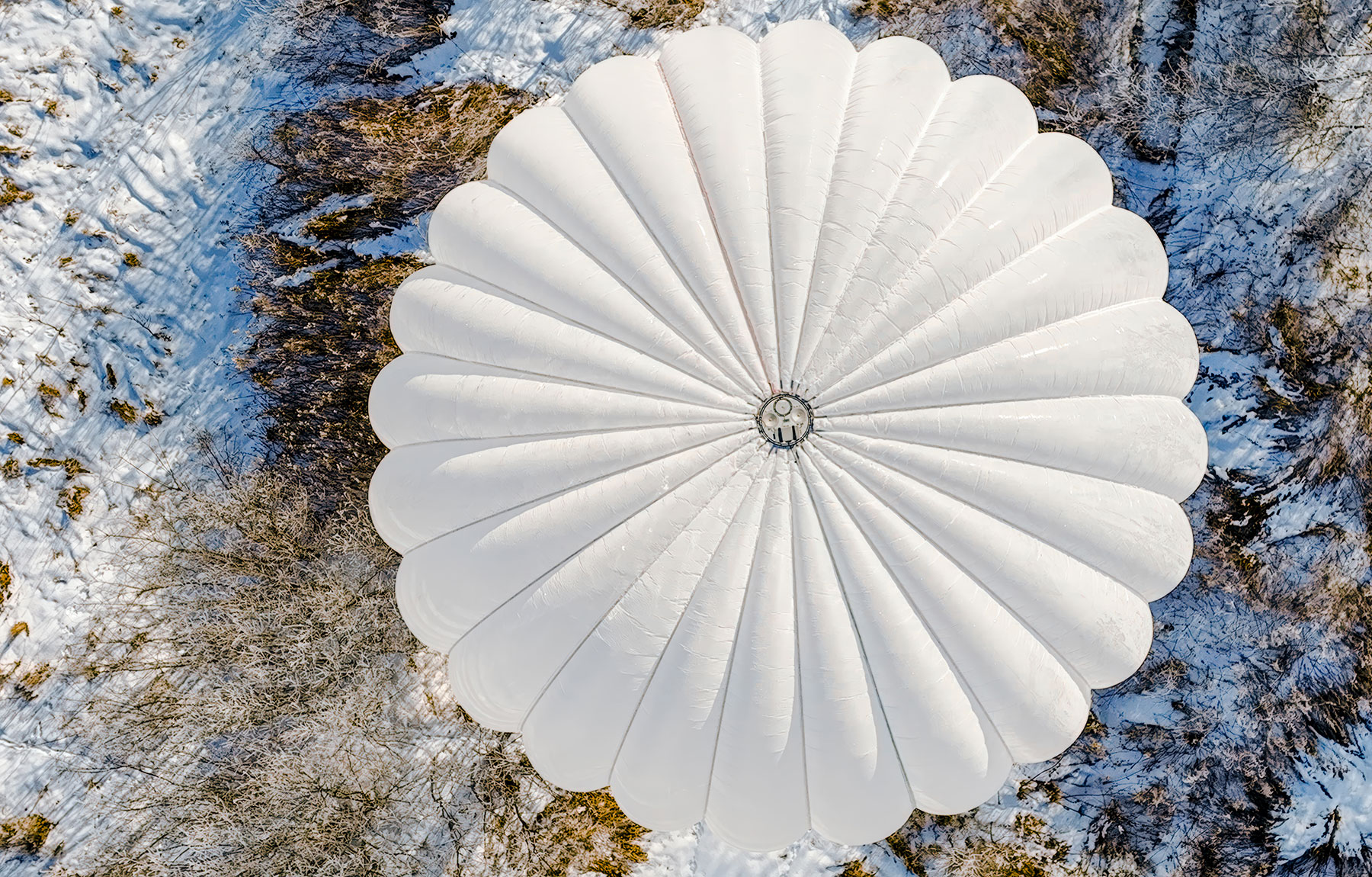
  • Even if the envelope is damaged, the balloon itself is designed to form a parachute shape, maintaining a safe descent speed.
Flight Operation System

01Buoyancy AdjustmentSystem

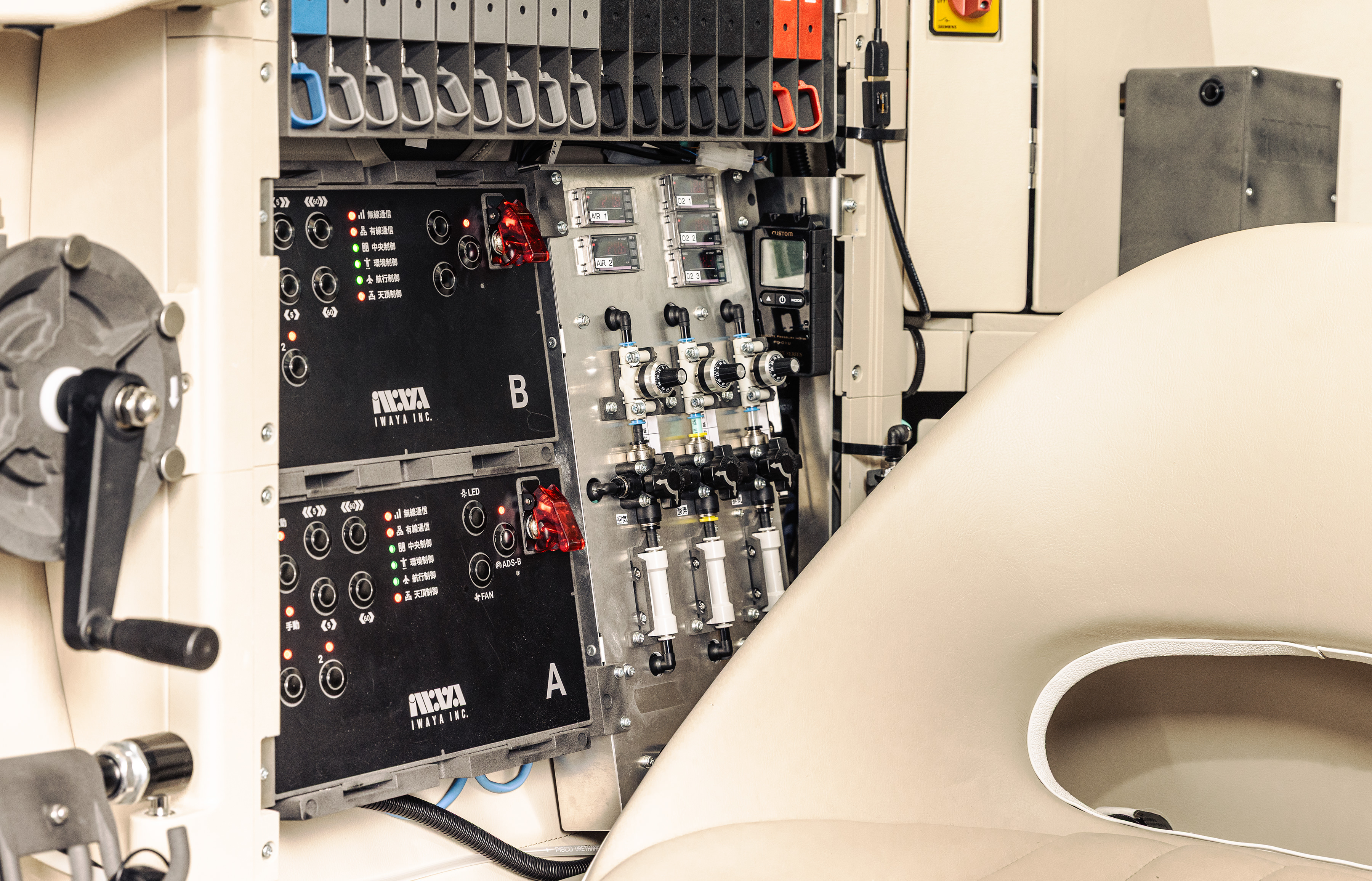
To control buoyancy and adjust altitude and speed, the balloon has three altitude control valves and a ballast release mechanism. In addition to gas release through a manual valve operated inside the cabin and two electric valves that can also be remotely controlled from the ground, buoyancy is managed by dropping ballast installed both inside and outside the cabin. This enables adjustment of ascent and descent acceleration. From takeoff to landing, the balloon adjusts vertical movement in response to weather conditions to ensure safe operation.

02Control and MonitoringSystem

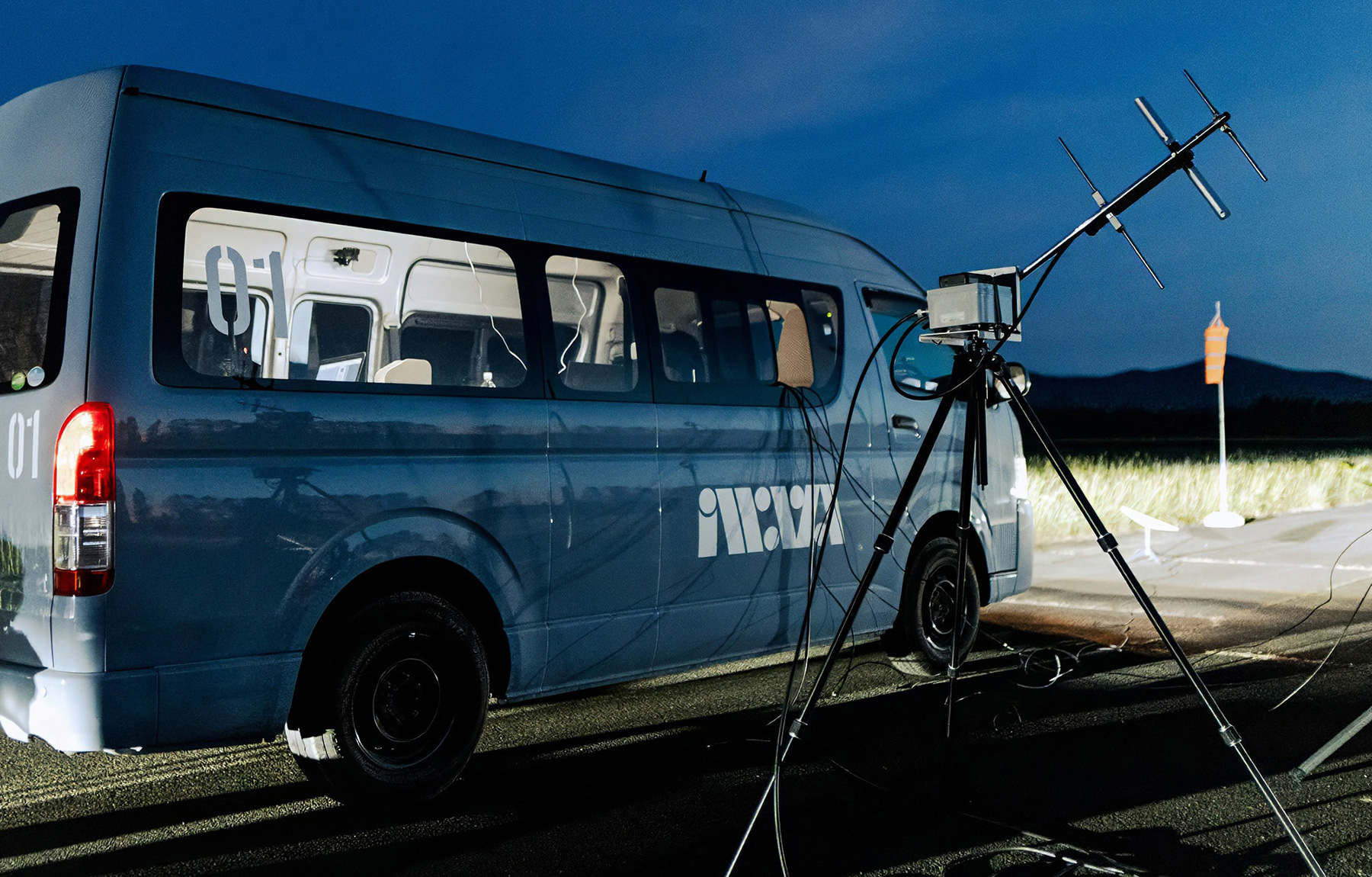
Iwaya Inc.’s balloon is the first in Japan, outside of aircraft, to be assigned a 24-bit address by the International Civil Aviation Organization (ICAO), allowing individual identification from anywhere. During flight, a control vehicle at the launch site constantly monitors and records altitude, position, and internal environment, and can remotely adjust altitude. Ground vehicles that track and recover the balloon are deployed along the flight path, collecting control information and ground data, ensuring safe landing and rapid recovery of the craft.

03Life SupportSystem

A carbon dioxide absorption device and a system that controls oxygen partial pressure to ground-level standards maintain a breathable environment inside the sealed cabin during flight. The cabin environment is constantly monitored by Ground control , and in emergencies descent can be remotely initiated from the ground. In the event of sudden decompression or the need for emergency evacuation, onboard oxygen masks and parachutes allow the pilot to take direct action to protect the lives of the passenger.

CONTACT

To inquire about the project,
please use the form on the “CONTACT” page.

CONTACT